The Effects of Smoking on the Heart
Information Design
Visual Design
Project Duration
Team
Tools
Role
1 Month (Jan-Feb 2025)
Solo
Adobe Illustrator
Visual Design
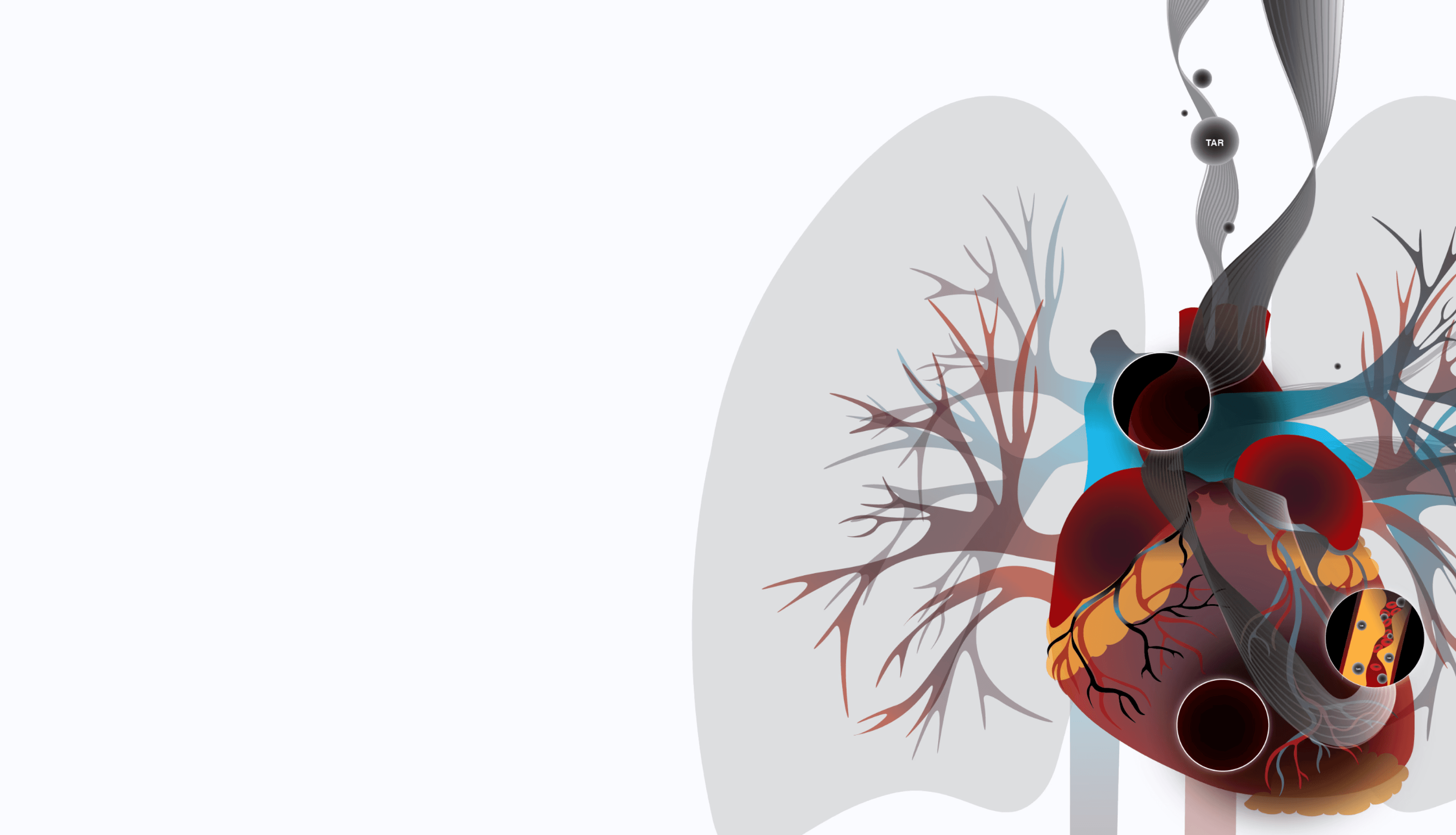
An infographic poster exploring the physiological impact of smoking, moving beyond general warnings to visualize the direct, internal consequences of inhalation.
The Effects of Smoking on the Heart
Product Design
UX/UI Design
UX Research
Project Duration
Team
Tools
Role
1 Month (Jan-Feb 2025)
Solo
Adobe Illustrator
Visual Design
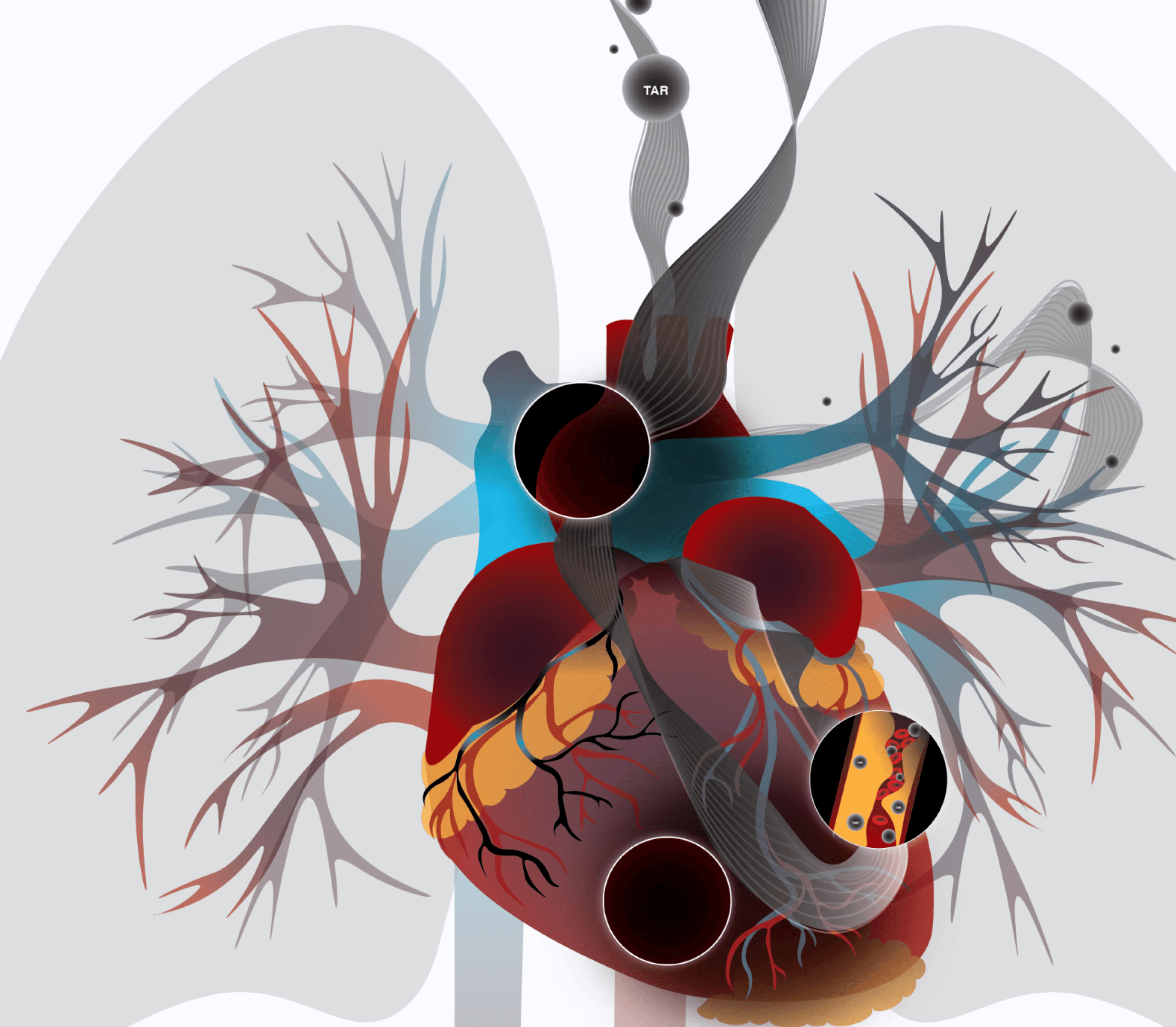
An infographic poster exploring the physiological impact of smoking, moving beyond general warnings to visualize the direct, internal consequences of inhalation.
The Effects of Smoking on the Heart
Product Design
UX/UI Design
UX Research
Project Duration
Team
Tools
Role
1 Month (Jan-Feb 2025)
Solo
Adobe Illustrator
Visual Design
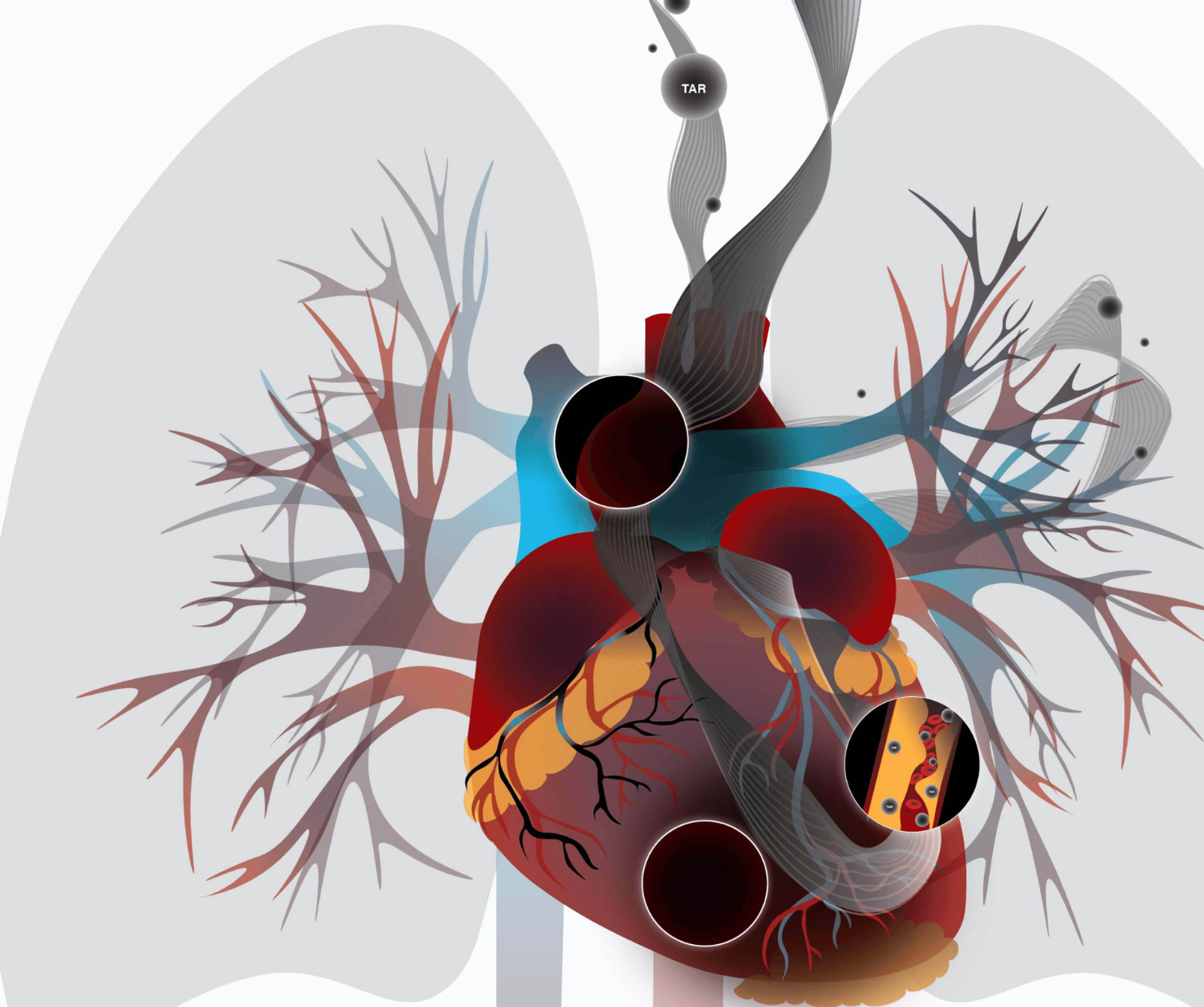
An infographic poster exploring the physiological impact of smoking, moving beyond general warnings to visualize the direct, internal consequences of inhalation.
RESEARCH
DESIGN SOLUTION
TAKEAWAYS
OVERVIEW
OVERVIEW
"The Effects of Smoking on the Heart" is a narrative-driven flow infographic designed to visualize the destructive journey of cigarette smoke through the human body.
By tracing the "smoke pathway" from the initial inhalation to systemic organ damage, the project transforms complex physiological data into a clear, step-by-step visual story. The design focuses specifically on the heart, illustrating how localized habits lead to devastating, long-term cardiovascular consequences.
"The Effects of Smoking on the Heart" is a narrative-driven flow infographic designed to visualize the destructive journey of cigarette smoke through the human body.
By tracing the "smoke pathway" from the initial inhalation to systemic organ damage, the project transforms complex physiological data into a clear, step-by-step visual story. The design focuses specifically on the heart, illustrating how localized habits lead to devastating, long-term cardiovascular consequences.
The Challenge
The Challenge
How to simplify the intricate biological process of toxin absorption without losing the gravity of the medical facts?
I needed to create a layout that felt intuitive—guiding a viewer’s eye through a logical anatomical sequence—while balancing a "flow" structure with a "narrative" tone. The goal was to make the invisible process of internal damage visible and immediately understandable to a general audience.
How to simplify the intricate biological process of toxin absorption without losing the gravity of the medical facts?
I needed to create a layout that felt intuitive—guiding a viewer’s eye through a logical anatomical sequence—while balancing a "flow" structure with a "narrative" tone. The goal was to make the invisible process of internal damage visible and immediately understandable to a general audience.
Project Objectives
Project Objectives
Raise public awareness regarding the long-term dangers of smoking by showcasing its specific impact on the heart and circulatory system.
Provide a deeper understanding of where and how damage occurs, ultimately urging viewers to reconsider the harmful effects of smoking on their longevity.
Raise public awareness regarding the long-term dangers of smoking by showcasing its specific impact on the heart and circulatory system.
Provide a deeper understanding of where and how damage occurs, ultimately urging viewers to reconsider the harmful effects of smoking on their longevity.
Design Strategy
Design Strategy
Linear Storytelling
Utilized the smoke itself as a directional guide, creating a logical path from the mouth and lungs to the heart, brain, and beyond.Macro & Micro Perspectives
The layout features "zoomed-in" sections. These detailed callouts provide a granular look at the damage occurring within blood vessels and cardiac tissue, providing context that a simple silhouette cannot.Achromatic vs. Organic Palette
Dark, ashen tones for the smoke and toxins to create a stark, visceral contrast against the vibrant reds of healthy arteries and organs. This colour tension visually emphasizes the concept of "contamination."
Linear Storytelling
Utilized the smoke itself as a directional guide, creating a logical path from the mouth and lungs to the heart, brain, and beyond.Macro & Micro Perspectives
The layout features "zoomed-in" sections. These detailed callouts provide a granular look at the damage occurring within blood vessels and cardiac tissue, providing context that a simple silhouette cannot.Achromatic vs. Organic Palette
Dark, ashen tones for the smoke and toxins to create a stark, visceral contrast against the vibrant reds of healthy arteries and organs. This colour tension visually emphasizes the concept of "contamination."
RESEARCH
RESEARCH
Subject Research
Subject Research
How did I began?
How did I began?
I first began looking into the cardiovascular process and separating complex biological data into digestible categories.
I first began looking into the cardiovascular process and separating complex biological data into digestible categories.
To build a comprehensive narrative, I analyzed the physiological impact of tobacco and organized my findings into four critical sections:
To build a comprehensive narrative, I analyzed the physiological impact of tobacco and organized my findings into four critical sections:
Immediate Effects
Identifying the "instant" triggers, such as increased heart rate and the immediate displacement of oxygen by carbon monoxide.
Long-Term Consequences
Researching the cumulative damage, specifically how chronic inflammation leads to the hardening of arteries.
Immediate Effects
Identifying the "instant" triggers, such as increased heart rate and the immediate displacement of oxygen by carbon monoxide.
Long-Term Consequences
Researching the cumulative damage, specifically how chronic inflammation leads to the hardening of arteries.
Diseases Linked to Smoking
Mapping out the broader health outcomes, from coronary heart disease to stroke, to show the systemic reach of the habit.
Chemical Composition
Cataloging the specific toxins—like nicotine, tar, and formaldehyde—that act as the "protagonists" in this destructive pathway.
Diseases Linked to Smoking
Mapping out the broader health outcomes, from coronary heart disease to stroke, to show the systemic reach of the habit.
Chemical Composition
Cataloging the specific toxins—like nicotine, tar, and formaldehyde—that act as the "protagonists" in this destructive pathway.
Smoking causes instant and long-term rises in blood pressure, and heart rate, reduces blood flow from the heart and to the brain, and the amount of oxygen that reaches the body’s tissues.
Smoking causes instant and long-term rises in blood pressure, and heart rate, reduces blood flow from the heart and to the brain, and the amount of oxygen that reaches the body’s tissues.
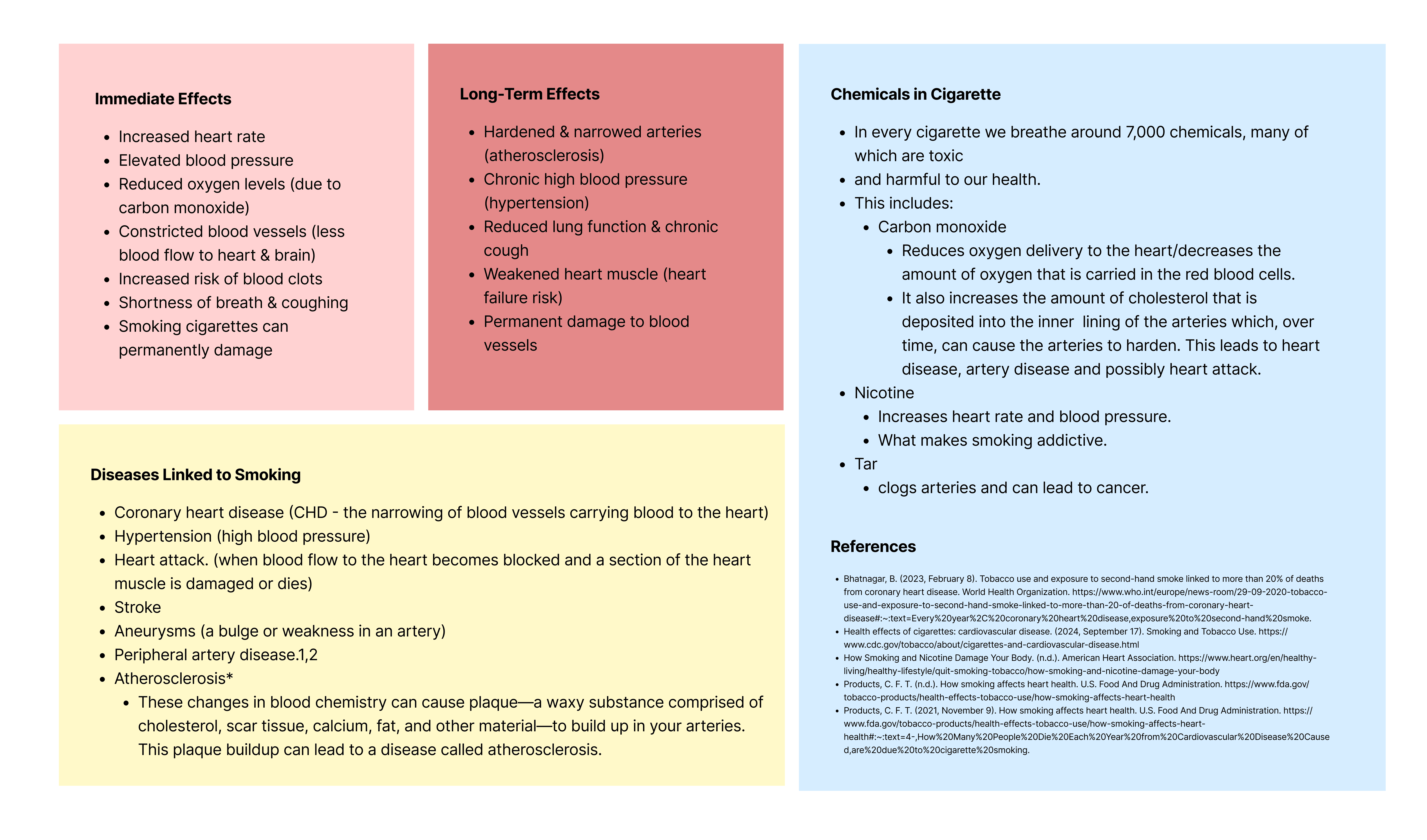
I began by mapping out the macro-narrative by breaking it down into four chronological stages.
I began by mapping out the macro-narrative by breaking it down into four chronological stages.

Next, I plotted the physical path the toxins take to visualize the interconnectedness of our organs. By tracing the route, it allow me to visualize that while smoking starts in the respiratory system, it is fundamentally a cardiovascular and neurological crisis.
Next, I plotted the physical path the toxins take to visualize the interconnectedness of our organs. By tracing the route, it allow me to visualize that while smoking starts in the respiratory system, it is fundamentally a cardiovascular and neurological crisis.
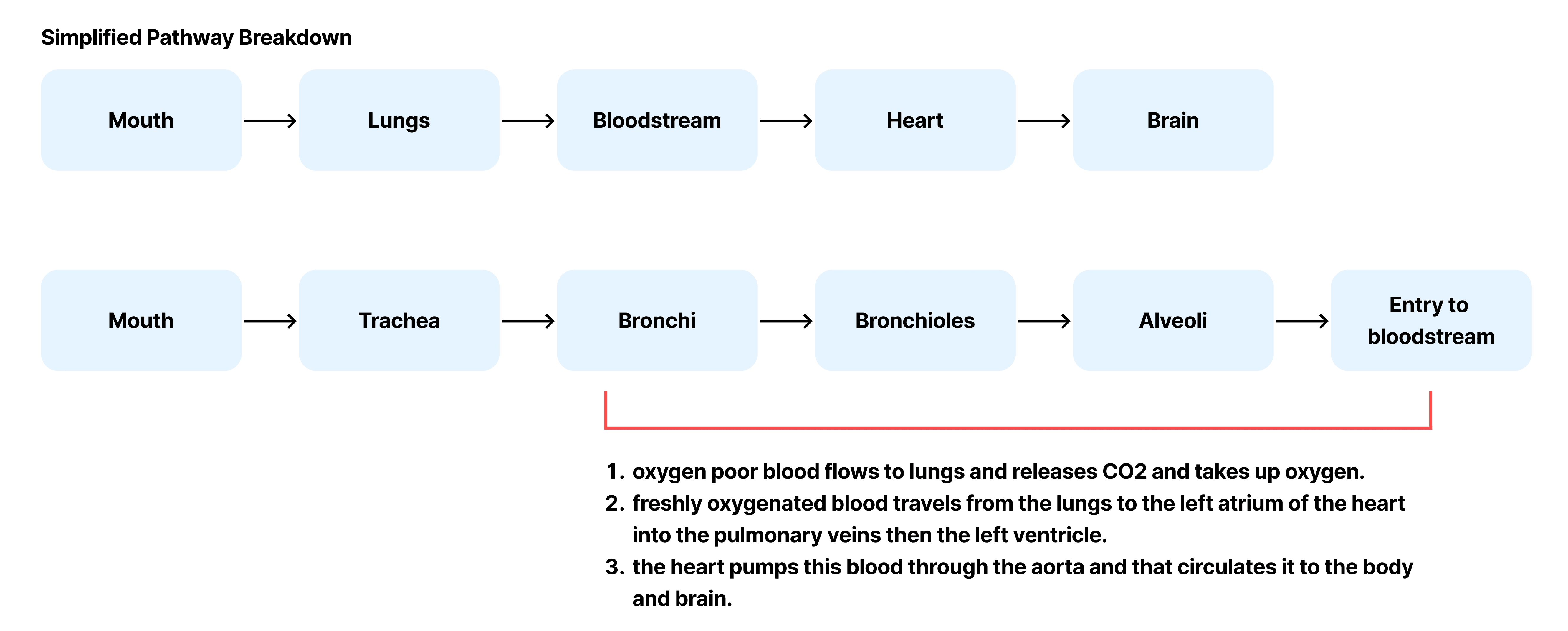
I mapped out the exact 'point of entry' where smoke turns into a blood-borne toxin. I traced the internal architecture from the mouth and trachea, down through the branching bronchi and bronchioles, until I reached the alveoli. Visualizing this specific transition was key to creating the 'zoomed-in' sections of the infographic, as it shows exactly how the lungs act as a gateway for heart damage.
I mapped out the exact 'point of entry' where smoke turns into a blood-borne toxin. I traced the internal architecture from the mouth and trachea, down through the branching bronchi and bronchioles, until I reached the alveoli.
Visualizing this specific transition was key to creating the 'zoomed-in' sections of the infographic, as it shows exactly how the lungs act as a gateway for heart damage.
Moodboard
Moodboard


DESIGN SOLUTION
DESIGN SOLUTION
DESIGN SOLUTION
Target User
Target User
Who are our users and how does this infographic concern them?
Who are our users and how does this infographic concern them?
The primary user is current smokers, at-risk youth and general public.
The primary user is current smokers, at-risk youth and general public.
This demographic ranges from young adults who are habit-forming to long-term smokers who have become desensitized to standard text-based health warnings. The design's clear flow makes it accessible for anyone looking for a quick yet impactful health briefing.
Teens and young adults: Prevention and early health education.
Middle-aged adults & Seniors: Emphasize long-term health consequences and benefits of quitting.
This demographic ranges from young adults who are habit-forming to long-term smokers who have become desensitized to standard text-based health warnings.
The design's clear flow makes it accessible for anyone looking for a quick yet impactful health briefing.
Teens and young adults: Prevention and early health education.
Middle-aged adults & Seniors: Emphasize long-term health consequences and benefits of quitting.
What purpose does this infographic serve them?
What purpose does this infographic serve them?
Serves as a persuasive educational tool.
Smokers may need information for personal health concerns.
Moves the conversation from a vague "smoking is bad" to a specific understanding of how toxins physically infiltrate and compromise the cardiovascular system.
Serves as a persuasive educational tool.
Smokers may need information for personal health concerns.
Moves the conversation from a vague "smoking is bad" to a specific understanding of how toxins physically infiltrate and compromise the cardiovascular system.
Expertise Level
Expertise Level
Most smokers are aware that "smoking is bad," but they often lack specific knowledge regarding the mechanisms of internal damage. They understand the high-level risks (like cancer) but may not realize how carbon monoxide immediately displaces oxygen in the blood or how toxins physically scar the heart's arteries.
The design meets them at this level by using recognizable anatomy and simple symbols—like triangles for warnings—to bridge the gap between general awareness and medical reality.
Most smokers are aware that "smoking is bad," but they often lack specific knowledge regarding the mechanisms of internal damage. They understand the high-level risks (like cancer) but may not realize how carbon monoxide immediately displaces oxygen in the blood or how toxins physically scar the heart's arteries.
The design meets them at this level by using recognizable anatomy and simple symbols—like triangles for warnings—to bridge the gap between general awareness and medical reality.
Interest Level
Interest Level
Smokers may resist messages about smoking risks.
Smokers often develop a "defensive avoidance" toward traditional anti-smoking messages, frequently tuning out graphic imagery or repetitive slogans.
Smokers may resist messages about smoking risks.
Smokers often develop a "defensive avoidance" toward traditional anti-smoking messages, frequently tuning out graphic imagery or repetitive slogans.
Indirectly Affected Individuals
Indirectly Affected Individuals
This includes concerned family members, healthcare practitioners, and community educators.
Family members: A informative visual that can be used as a non-confrontational way to illustrate the "invisible" damage occurring to a loved one.
Healthcare Professionals: Need educational tools to explain smoking’s effects to patients in an easy-to-understand format.
Educators: Easy and comprehensible information for classroom use.
This includes concerned family members, healthcare practitioners, and community educators.
Family members: A informative visual that can be used as a non-confrontational way to illustrate the "invisible" damage occurring to a loved one.
Healthcare Professionals: Need educational tools to explain smoking’s effects to patients in an easy-to-understand format.
Educators: Easy and comprehensible information for classroom use.
Ideation
Ideation
I explored different layouts and ways to visualize the cardiovascular system and identifying the areas the damaging effects take place.
I explored different layouts and ways to visualize the cardiovascular system and identifying the areas the damaging effects take place.
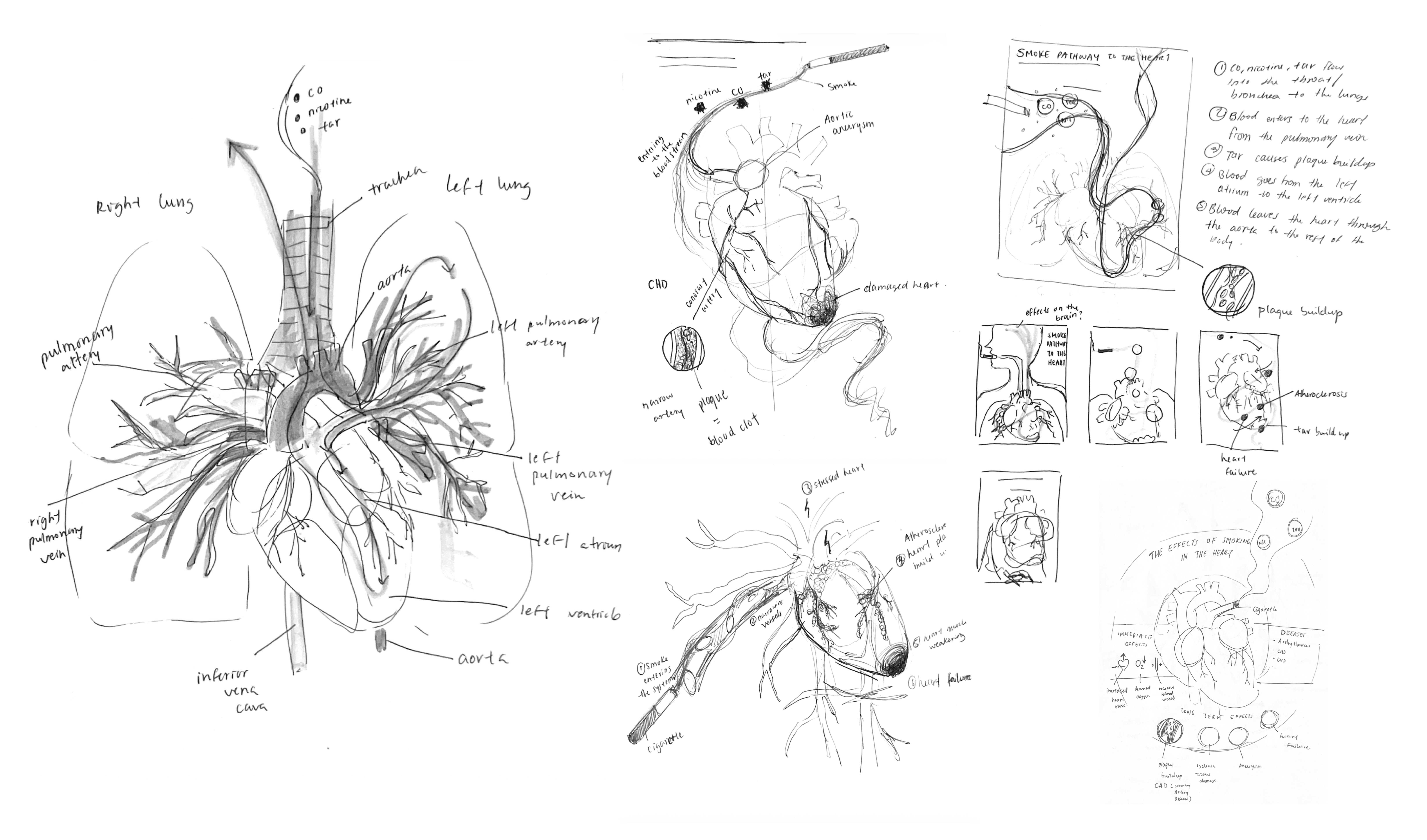
Here are some of the initial sketches I did to get a general idea of how to visualize the effects of smoking on the heart before moving on digitally. I explored different layouts and structure to potentially experiment later on.
Here are some of the initial sketches I did to get a general idea of how to visualize the effects of smoking on the heart before moving on digitally. I explored different layouts and structure to potentially experiment later on.
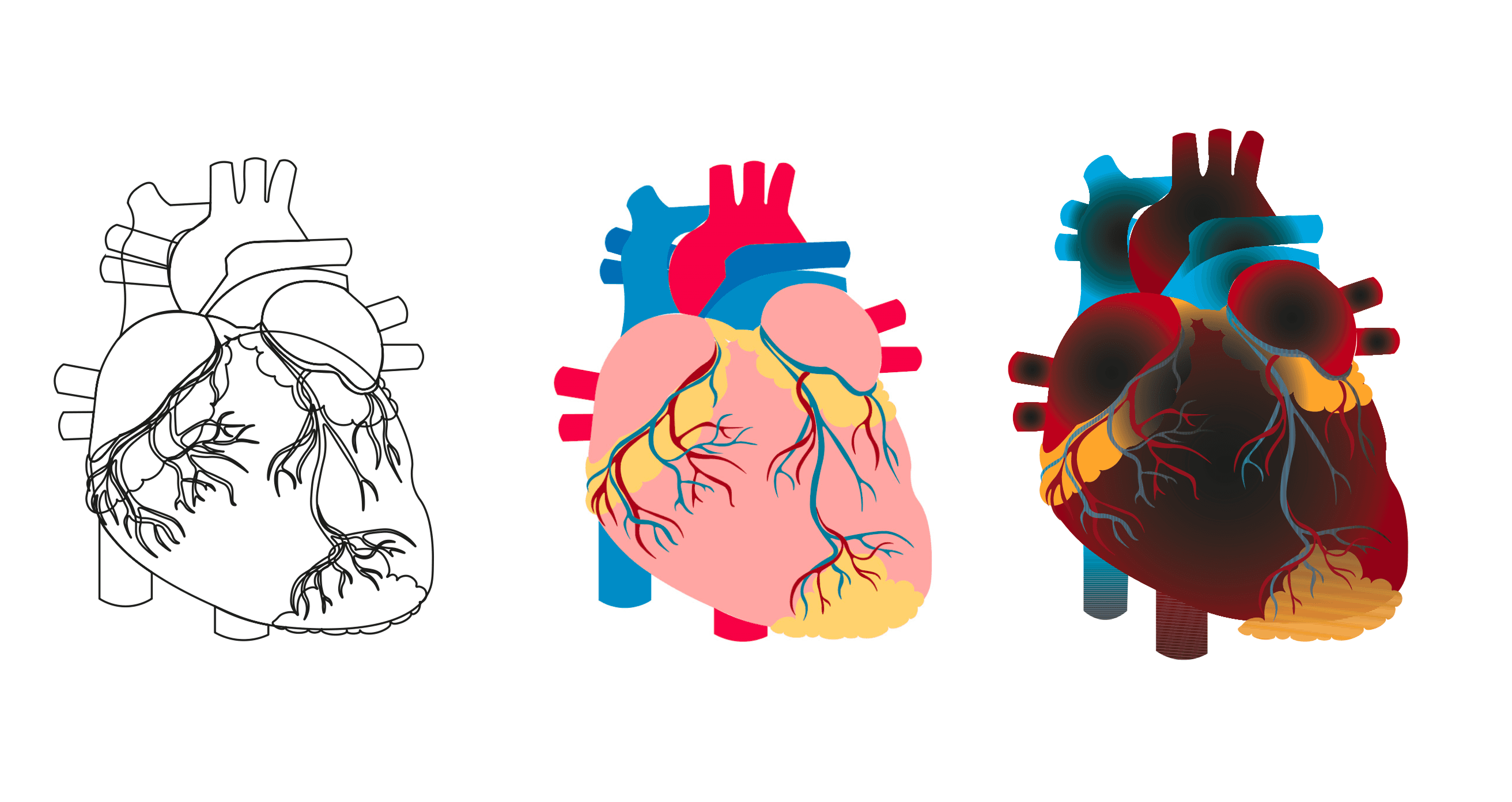
Vectoring Ideas
Vectoring Ideas
Exploration
Exploration
Design Development
Design Development
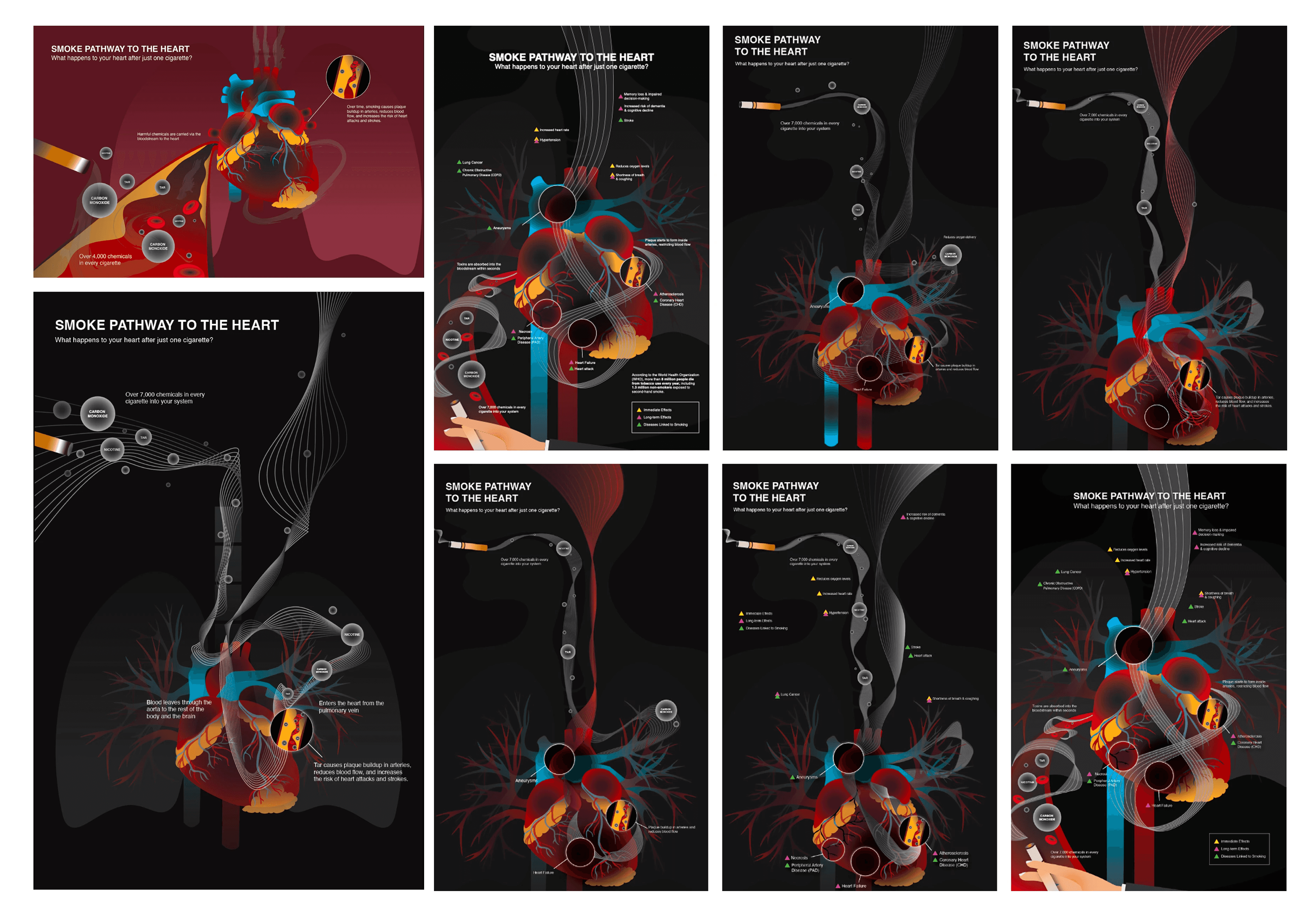
These are the initial first initial sketches I made. The information wasn’t complete yet but it was to visualize overall the layout and structure of the infographic.
I began experimenting with the smoke outline and how to organize the information. I explored different ways to shape the smoke around heart while still maintaining an accurate path of the blood flow on the heart. I also started implementing the effects of smoking throughout the pathway to create a more dynamic and informative visualization.
These are the initial first initial sketches I made. The information wasn’t complete yet but it was to visualize overall the layout and structure of the infographic.
I began experimenting with the smoke outline and how to organize the information. I explored different ways to shape the smoke around heart while still maintaining an accurate path of the blood flow on the heart. I also started implementing the effects of smoking throughout the pathway to create a more dynamic and informative visualization.
Final Design
Final Design
The final design is an infographic that visually communicates both the immediate and long-term effects of smoking on the heart, emphasizing the severity and progression of its consequences.
The final design is an infographic that visually communicates both the immediate and long-term effects of smoking on the heart, emphasizing the severity and progression of its consequences.
It primarily takes the form of a flow infographic, guiding viewers through a clear, step-by-step sequence of physiological impacts, while incorporating a subtle narrative structure to suggest the passage of time.
The final design is an infographic that visually communicates both the immediate and long-term effects of smoking on the heart, emphasizing the severity and progression of its consequences.
It primarily takes the form of a flow infographic, guiding viewers through a clear, step-by-step sequence of physiological impacts, while incorporating a subtle narrative structure to suggest the passage of time.
Purpose
Raise awareness of the long-term dangers of smoking by showcasing the devastating impact on the heart. This infographic intends to urge viewers to consider the harmful effects on their health and take action to prevent these consequences.
Raise awareness of the long-term dangers of smoking by showcasing the devastating impact on the heart. This infographic intends to urge viewers to consider the harmful effects on their health and take action to prevent these consequences.
TAKEAWAYS
TAKEAWAYS
Reflection
Reflection
This project taught me how to break down complex steps into a cohesive visual narrative without losing the clinical urgency of the subject matter.
This project taught me how to break down complex steps into a cohesive visual narrative without losing the clinical urgency of the subject matter.
Through the process of iterating the smoke pathway, I gained a deeper understanding of how to lead a viewer through a story that is both educational and persuasive.
Through the process of iterating the smoke pathway, I gained a deeper understanding of how to lead a viewer through a story that is both educational and persuasive.
What did I learn?
Information Hierarchy
Information Hierarchy
Learned how to prioritize data so that the "big picture" (the smoke pathway) and the "fine details" (zoomed-in organ damage) could coexist without cluttering the layout.
Learned how to prioritize data so that the "big picture" (the smoke pathway) and the "fine details" (zoomed-in organ damage) could coexist without cluttering the layout.
Visual Storytelling
Visual Storytelling
I realized that a "flow" structure becomes much more engaging when it’s treated as a narrative, turning a biological process into a journey the viewer feels compelled to follow.
I realized that a "flow" structure becomes much more engaging when it’s treated as a narrative, turning a biological process into a journey the viewer feels compelled to follow.
Challenges
Simplifying Biology
Simplifying Biology
Condensing the intricate chemical and physical process of toxin absorption into a step-by-step flow required multiple iterations to ensure I wasn't oversimplifying the medical gravity.
Condensing the intricate chemical and physical process of toxin absorption into a step-by-step flow required multiple iterations to ensure I wasn't oversimplifying the medical gravity.
Directing the Eye
Directing the Eye
Creating a natural flow for the viewer's gaze—moving from the mouth, through the lungs, and into the heart—required careful placement of the smoke elements to ensure the path felt logical rather than forced.
Creating a natural flow for the viewer's gaze—moving from the mouth, through the lungs, and into the heart—required careful placement of the smoke elements to ensure the path felt logical rather than forced.